ChainSpotlight | Writers & Authors | Literary Voices On Chain

Writers & Authors

The storytellers, wordsmiths, and literary voices shaping culture.
Their words and creative journeys — permanently preserved on the blockchain.

← Back to Home

About Writers & Authors

The storytellers, poets, and authors who capture the human experience through words. This category celebrates those who craft narratives that entertain, challenge, heal, and inspire — preserving their literary voices forever on the blockchain.

Featured Writers & Authors

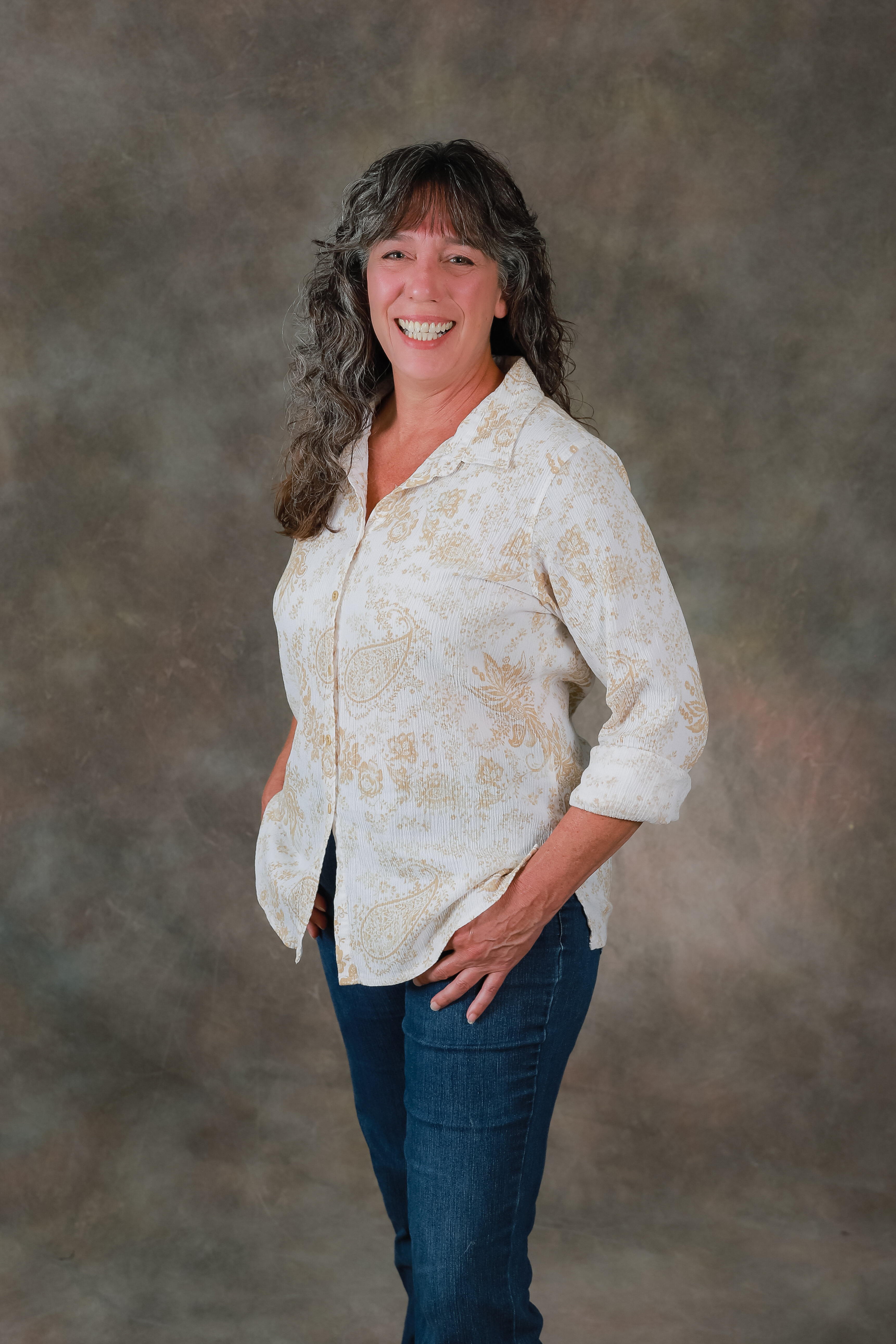
Holly B. Gutwillinger

Holly B. Gutwillinger

Writer & Author

The Unstoppable Train of My Second Act — embracing leadership in the second half of life.

🔗 Copy Story Link 🔗 On Chain Read Full Story →

The Unstoppable Train of My Second Act

Picture the runaway locomotive 777 from the 2010 film Unstoppable—39 cars, no driver, barreling at 70 mph through Pennsylvania with unrelenting momentum.

Have that image in your mind?

Now, envision the women conductors such as Christine Aldeis, an engineer for the Santa Fe Railway in the 1970s, and Bonnie Leake, an engineer for Union Pacific in 1974, to name a few. These bold, courageous women blazed trails through an industry that never expected them.

For fifty years, I avoided being like them, believing my success lay in supporting others from the sidelines.

Born into a generation of modesty and discretion, I was told to keep my ego in check, and never, ever brag. So, I became the quiet girl who found success in the shadows, convinced I was happy being a follower. But that little voice—the inner critic who learned to use her power for good—kept reminding me: Lead by example. Lift other humans high.

Use your superpowers to accomplish greatness.

I chugged along.

I'd never used the term unstoppable to describe myself, but deep down I knew it applied to me. The answer arrived one morning at 4 a.m., wide awake in the darkness, when I finally stopped making excuses for playing small. In that quiet hour before dawn, truth has a way of breaking through like a locomotive announcing its presence, unmistakable and impossible to ignore. I realized I'd been waiting for permission that would never come—approval to step forward, to claim my own vision, to stop deflecting praise onto others when I'd done the work too.

Building Momentum

The forward movement of a train's rolling stock gradually builds, as did my self-confidence and the ability to recognize my potential. Each metaphorical car became a receptacle of experiences accumulated over the years: the project I'd led but let someone else present, the promotion I'd screened myself out of, the ideas and advice I’d offered to managers who spoke them aloud.

I'd convinced myself I was happy being a follower.

Now, my life's accomplishments and plans put me in the driver's seat for this second act. I'm mentoring women in my industry. I wrote the book I’d outlined in ninety days, but never believed anyone would want to read it.

I got in my way most of the time and prevented my best version from being set free. I thrived as a card-carrying member of the self-sabotage club, a practitioner of "fake it till you make it,” for the sake of humility.

My preferred motto, written by the great female author A.J. Sherwood, remained at the forefront of my mind: "Underestimate me, that'll be fun." It became my quiet rebellion against all those years of making myself smaller.

The Turning Point

Ego and humility have been in constant conflict within me, and I'm here to say there is a time and place for both. I learned I could lead by example while staying true to my authenticity. I no longer had to hide behind the work of others because my ability to see potential in people, to build momentum, to keep moving when others stalled—that was leadership too.

Moving Forward

Others acknowledged my capacity to succeed far sooner than I did. They saw someone who could lead without needing to stand at the front of the line, someone who'd champion others while moving her own locomotive forward.

So, you see, I am unstoppable. Not because I'm the loudest engine or because I finally conquered my doubts, but because I'm moving forward anyway, pulling others along, showing them what's possible when you board that early morning train to your second act.

You never know who you'll influence along the way. But that's the beauty of being unstoppable—you keep moving, and others see their own locomotives reflected in yours.

What momentum have you been building without even realizing it? What would happen if you stopped waiting for permission and started moving forward?

Your train is already on the tracks. It's time to take control.

Contact at: [email protected]

Colin Belcourt

Colin Belcourt

Writer & Author

The Journey of an Indie Author — refusing to soften queer stories for the market.

🔗 Copy Story Link 🔗 On Chain Read Full Story →

The Journey of an Indie Author

I did not write The Blue Hour Gospel because I had a clean, marketable story to tell.

I wrote it because I had spent too many years watching queer stories get softened into something easier to consume. Something charming and triumphant or something that made sense to people who wanted the gay experience to arrive pre-explained, emotionally tidy, and ultimately reassuring. A decade ago, there was raw gay stories coming out, and everyone complained they were too sad and not jovial enough. They actively shifted the narrative plots to be unrepresentative because to keep the raw and emotionally sad stories would be to admit they still didn’t have the privilege the characters in the happy-go-lucky stories did.

That was not the life I knew.

The life I knew had longing in it, shame, silence, desire, happiness, love, grief, trauma, adventure braided together with nowhere safe to go. My story had the strange grief of growing up before you had language for yourself and the quiet violence of building a life that looked right from the outside while some essential part of you disappeared behind it.

That was the book I wanted to write.

The Blue Hour Gospel became a queer literary memoir about the fear of living the wrong life, and the slow erasure of the self in order to make that life look right. It was never meant to be a sanitized version of queer life. I was not interested in proving that queer people are acceptable, successful, lovable, or worthy only when we fit into the shapes other people recognize.

When I started thinking about publishing, I already knew the book did not fit neatly into the kinds of gay stories that often get pushed forward. It was not m/m sports romance, or the glossy memoir of whatever white gay celebrity happens to be having a cultural moment. It was not built around a clean arc from suffering to pride because like most of us it lived somewhere more uncomfortable than that, and I knew that would make it harder.

There is a version of queer storytelling that the publishing world seems to understand. It is polished enough to sell, painful enough to feel important, but not so difficult that it becomes inconvenient. I did not want to sand the edges off my work so it could pass through that door, so I chose to self-publish. And by “chose” I mean I recognized the importance of not quitting because someone else didn’t say “you are important enough to be chosen”.

That choice was all about alignment. If the book was going to be a love letter to every gay boy who had ever felt that he could not be fully himself and still be successful, then the process of making the book had to reflect that too.

I wanted to find gay editors, gay designers, and queer professionals wherever I could because many of us have been conditioned to believe that identity alone makes someone better at the work. So, because queer people are overlooked in every industry, often in quiet and ordinary ways I felt it only appropriate to flip that around and say if you don’t fit OUR box then you don’t fit this. Because there are brilliant people whose voices, instincts, and talents are underestimated for the same reasons our stories are.

I wanted the book to be made with people who understood, somewhere in their bones, what it means to move through the world while translating yourself.

Self-publishing meant I had to learn everything, and I will admit I was naive. Editing is something I thought meant spellcheck but encompasses many different styles and versions. Design is tricky because we live in an art space of anti-ai so any small decision could have you branded as an AI user and therefore blacklisted from shelves. Formatting is a world I was blessed to find someone for because if you think formatting a word document is hard, EPUBs are your second layer of hell. Distribution, marketing and all the other awkward and vulnerable work of putting your own book into the world and asking people to care are all things no one can prepare you for. There is no romance in that part, at least not the easy kind. It is exhausting and humbling and expensive and it asks you to believe in your work on days when you are absolutely sure no one else will.

But there was also freedom in it!

I did not have to make the book smaller and it didnt have to explain away its messiness. I didn’t have to make the narrator more likable, more heroic, more certain, more muscular, thinner, or more easily understood. I could let the book be what it was meant to be which was a return to the emotional, nostalgic, difficult, sometimes inconvenient, and deeply honest story. And that honesty matters to me.

Queer life is not only the moment we come out or only pride celebrations, romances, chosen family, or survival. It is also the years before we know what we are surviving. It is the body we learned to judge before we learned to inhabit it. It is the life we built to stay safe and the memory of who we might have been if we had been allowed to begin sooner.

Writing The Blue Hour Gospel changed my understanding of what success could mean. It reminded me that success is not always permission from an industry. Sometimes it’s refusing to wait for permission and build the thing yourself because the gate was never designed with you in mind. It also gave me great appreciation for reviews. I was NEVER one to leave a review after I finished reading a book because I thought why would this creative genius care what I liked about this? Well now I know that big, small, detailed, critical, a review is validation that someone is reading and thinking about your story.

I am now working on my second book, WorldEater, which continues many of the questions that started with The Blue Hour Gospel. It looks more directly at the gay community itself, and at how difficult it can be to separate who we actually are from the version of ourselves the community asks us to become in order to belong.

That question keeps haunting me, who are we? How much of us is us? How much of us is performance even when we are in the group we are supposed to be ourselves in? How much of what we call identity is actually a costume we were handed by people who promised it would make us desirable, acceptable, visible, safe?

I don’t think my writing is interested in easy answers and if it ever does then you know it’s a case of the body snatchers. I don’t think I trust easy answers anymore either. What I am interested in is making room for the parts of queer life that are harder to package. The ugly feelings, the complicated desires, the memories we are embarrassed to admit still hurt and the versions of ourselves we abandoned because we thought we had to.

That is the journey I am on as a writer. Toward a return to honesty.

Contact at: [email protected]

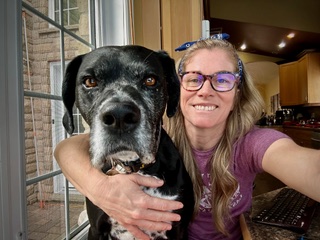
Kim Lengling

Kim Lengling

Author • Podcaster • Storyteller

The Accidental Writer — turning life’s unexpected moments into powerful storytelling.

🔗 Copy Story Link 🔗 On Chain Read Full Story →

Kim Lengling: The Accidental Writer

I consider myself a bit of an accidental writer. Honestly, if you had told me years ago that I’d one day be writing books, articles, blogs, and hosting a podcast where I interview authors and storytellers from all walks of life, I probably would’ve laughed and said, “You’ve got the wrong person.”

But sometimes life quietly nudges us toward things we didn’t see coming.

In 2014, I was asked to participate as a co-author in a book alongside 19 other women, sharing stories meant to inspire others. At that point, I was completely new to writing. I had no idea what I was doing. I found myself learning about edits, critiques, rewrites, structure, vulnerability, and what it actually means to share a personal story with readers.

And somewhere during that process, I got hooked.

But the truth is, my writing journey started long before that, and that’s why I call myself an accidental writer.

About twenty years ago — gosh, time really does fly — I was asked to give a speech at a large veteran’s event in my area. I had never written a speech, given one, or stood in front of a crowd. No pressure, right?

The speech centered around my step-grandfather, who was the last World War I veteran in my area. He passed away in 1997 at the age of 104, and while preparing for the speech, I spent hours with my stepdad going through old letters, faded photographs, military items, and keepsakes that had been packed away for decades.

It felt like opening a time capsule. Every letter told a story. Every photograph carried emotion. Every item held a piece of history.

For weeks, I worked on that speech. I read it out loud over and over again — to myself, to friends, to anyone willing to listen and give feedback. I rewrote sections constantly, trying to make sure I honored not only my step-grandfather’s story, but the stories of so many veterans who served beside him.

Then the day of the event arrived. There I was, standing in front of approximately 800 people, with television and radio stations there covering the event. Again… no pressure.

I’ll admit I was nervous, but something unexpected happened once I started speaking. Somewhere between the opening lines and the heart of the story, I stopped focusing on my nerves and fell into the story I was telling. I wasn’t thinking about the crowd anymore. I was thinking about history, sacrifice, family, and honoring a generation that deserved to be remembered.

When I finished speaking, there was total silence. I remember looking up and thinking, “Oh no… I blew it.” Then one person started clapping, and suddenly the entire crowd erupted in applause.

What I remember most, though, wasn’t the applause. It was the people standing directly in front of me. Many of them were crying. Veterans. Family members. Complete strangers. And in that moment, I realized that stories have power. Real power.

As I walked through the crowd afterward, trying to find my stepdad, someone from the local newspaper approached me and asked if I’d ever consider writing a monthly article about veterans for the paper.

I laughed and politely declined. “Oh gosh, thanks,” I said, “but I’m no writer.” The person looked at me and asked, “Who wrote your speech?” “Well… I did.” To which he replied, “Well, you are definitely a writer.”

It’s funny how sometimes someone else sees something in us long before we see it ourselves. That single moment changed the direction of my life.

I decided to give the monthly article a try. One article turned into fourteen years of monthly articles.

Over the years, I interviewed dozens and dozens — honestly, probably hundreds — of veterans, listening to their stories and helping preserve pieces of history that might otherwise have been forgotten. Every interview taught me something, not just about writing or history, but about people, resilience, humor, sacrifice, and connection.

And little by little, I kept learning. Through every article, blog, or book written. I’ve attended writers' conferences, met incredible authors, stretched myself creatively, and eventually launched my podcast, Let Fear Bounce, where storytelling and human connection remain at the center of what I do.

That very first speech — the one I was so nervous to give — led me on an unexpected journey into the world of non-fiction writing. That’s where I’ve remained: in true stories, lived experiences, and the beautiful messiness of real life.

Whether I’m writing from my own experiences or helping share someone else’s story, I’ve discovered that authenticity matters more than perfection ever will.

Now, I will admit… I do have a fiction book written. It is different from anything I normally write. It’s nowhere near ready to be published, but it exists, and honestly, I’m excited about it. I’m letting the process unfold in its own time and learning to enjoy the journey rather than rush toward the finish line.

That’s something writing has taught me, too. Stories take time. People do too.

These days, I continue writing non-fiction, articles, and blogs, interviewing guests on my podcast, and learning something new from every experience. And if I can toss out a few nuggets of hope along the way — maybe encourage someone to share their own story, face a fear, or simply feel a little less alone — then I think this accidental writer is probably right where she’s supposed to be.

www.kimlenglingauthor.com
Share your writing journey • Our team reviews every submission

ChainSpotlight

© 2026 ChainSpotlight. All Rights Reserved.

Permanently preserved on the blockchain.

Get Featured as a Writer or Author

ChainSpotlight