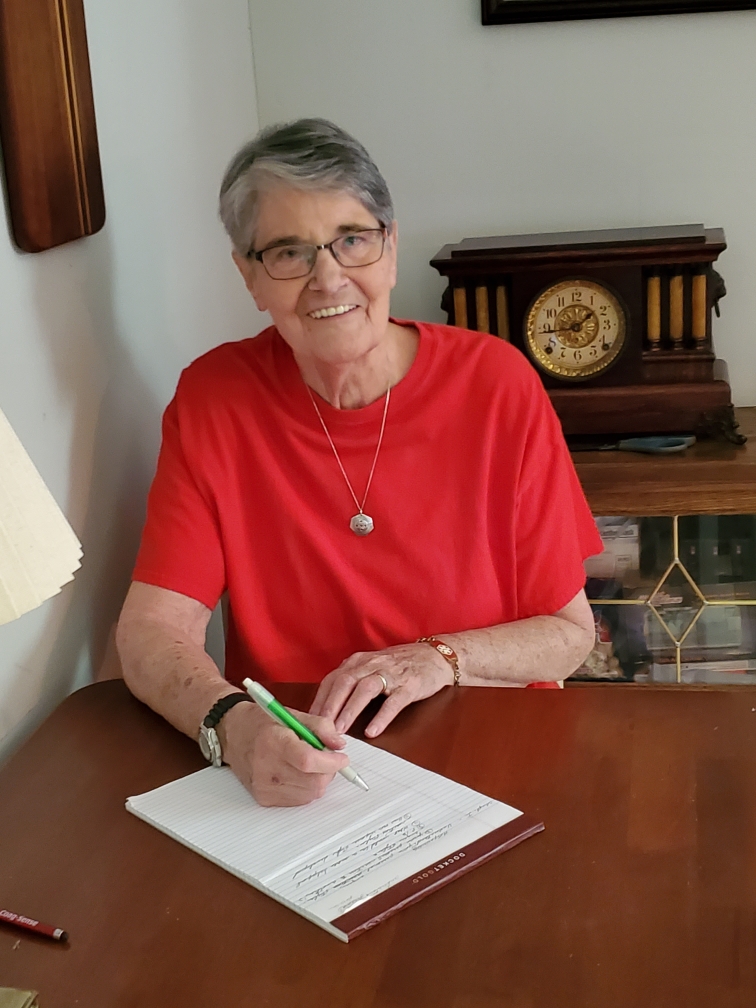
On my last visit to my cardiologist, he came into the room, pulled up a chair, and sat down in front of me. His facial expression was very serious. I thought, “Oh no! Bad news coming!”
He said only six words, “You manage your prosthesis very well.”
“Thank you,” was all I could think to say back. After multiple visits in the last three years, this was the first time he had mentioned my prosthetic leg. Of course, what’s below the knee has little to do with my heart valve. When the shock of his statement wore off, I explained how I’d lost my leg.
I was on a women’s semi-pro softball team and after a practice session, I headed home. The other players went to a club to dine and dance. Shortly before midnight, the team called and encouraged me to join them. I started up my motorcycle and headed out. While passing the only other car on a four lane road, the driver attempted to make a left hand turn from the far right lane. When the car hit me, my leg became wedged between its front tire and the wheel well, dragging me along.
A good Samaritan heard the noise, called 911, woke his wife up, sending her out to help the person outside in need of her help (she was a nurse). The last thing that I remember before losing consciousness was that nurse kneeling beside me, stroking my hair, and telling me softly, “Hold on.”
When I regained consciousness, I was covered by a sheet from the top of my head to the bottom of my feet. I was stretched out flat on a gurney, alone in an empty room, and when I raised my head to see why my right leg felt cold, all I could see below my knees was blood covering everything. I began yelling and the E.R. staff came running. After a syringe, thankfully given by a nurse, I passed out totally. The next thing that I became aware of was a trip from the operating room to a recovery room. They had surgically severed my right leg below the knee; making it possible for me to wear a prosthesis as comfortably as possible.
The cardiologist asked, “Did you gain anything helpful or worthwhile from living through this major mishap, like maybe it’s a good idea to stay away from motorcycles?” With a straight face I responded, “Oh Yes, my family was very poor and I could not go to college because of cost. That accident paid for my bachelor’s and master’s Degrees at a university, 800 miles from my home. It was one of the few colleges which had what I wanted to major in, “Correctional Counseling.”
I thought I wanted to be a Probation Officer. One field trip with a college class to the local prison changed that thought. I decided that I would do better working as a “general” counselor, helping people stay out of prison rather than helping them survive within the correctional system.
As I watched the expression of discontent on the Doctor’s face, it occurred to me that he might have been asking about non-monetary, human and/or spiritual lessons. My mind quickly jumped to the lessons I learned from that experience which helped me become a successful Clinical Director for various types of programs that provide treatment for Substance Use Disorders.
The first lesson that I explained to him had to do with learning new skills. I knew that the amputation would slow down my running skills on the baseball field. So, when the softball team came to visit me in the hospital and the captain asked, “How can we help?” I responded with the following request, “Would the team get together and help me learn how to play first base, instead of having me run around in the outfield?”
Each evening after eight hours of work, every member of the team got together at the ball field, with me on first base, to practice catching and throwing the ball, tagging the base or the player, moving to get to a fly ball without stumbling, and listening to advice given by the team players to resolve mishaps. After about two and a half weeks of this, a fly ball went high into the air, over my head, and would have landed behind me. I had to move quickly backwards, looking up and not at the ground, I saw the ball, I raised the glove, the ball hit inside the glove, I did not drop it. The batter was out. I would be okay! I looked to the sky, the only thing I could think to say was, “Thank you. Just thank you.”
That team taught me how to successfully manage, not only my prosthesis, but new supervisory situations. It boils down to, bring together a good team; ask for and use feedback from that team’s membership, and practice, over and over again, their recommendations until I get it right. Then add my personal touch to it.
Another important life situation that the prosthesis has taught me is to know, accept, and compensate for the limitations that come with it. The same is true for being the new leader of a team. I have been in my professional field for more than forty years and have been the director of at least six different types of facilities for individuals with Substance Use Disorders in numerous states.
Each state and each setting has different laws and guidelines for their facilities. The first thing I do when hired? I contact similar facilities and develop a team of directors that I can contact and ask for help when I do not know that facility type’s rules, regulations, and laws. Because I do this, I have passed all inspections without having to make changes and re-submit for another inspection.
I have become a part of that team. When my phone rings and another director, perhaps someone new at the job, says, “The state is coming next week. What do I need to have ready?” I respond, “When can we get together? We’ll take a look. You might be ready.” A teammate needs help. Now it’s my turn to respond and assist.
Lorrainne Bilodeau, LCAS, CCS
Contact: [email protected]